

Hydraulic systems, machine tools, and compressors run reliably – as long as their filters are clean. For many companies, spring marks the start of their most intensive production phase: an ideal time to check and replace filter elements and determine maintenance intervals. Acting now prevents unplanned downtime in the coming months.
Why filter changes are so important
A dirty or clogged filter is more than just a maintenance issue – it's a direct safety risk for pumps, valves, and bearings. The most common consequences:
- Pressure losses in the hydraulic system: Dirty return filters increase the differential pressure and put a constant strain on pumps. Typical threshold: Filter change at a differential pressure > 3.5 bar
- Increased energy consumption: Clogged compressed air filters or compressor filters force equipment to operate at higher power levels – with directly measurable effects on your electricity bill.
- Bearing damage and valve wear: Particles in hydraulic oil larger than 10 µm damage bearing surfaces and control edges. The ISO 4406 cleanliness class is a crucial benchmark for monitoring oil quality.
- Production downtime: An unplanned filter change during operation costs, on average, 3–5 times more than a scheduled change.
Technical note: By adhering to ISO standards and filter classes (e.g., ISO 16889, ISO 2941), you can precisely determine and plan the filter performance and cleanliness class of your system.
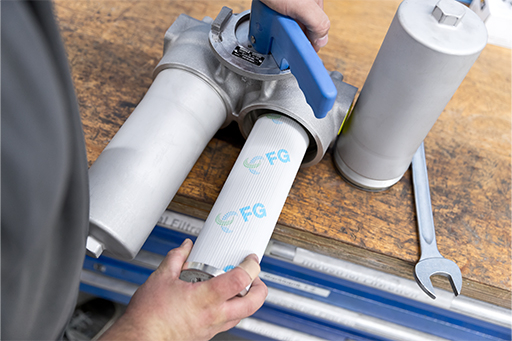
Recommended maintenance intervals
System / Filter Type Recommended Replacement Interval Note
Hydraulic filter (return line) Every 2,000 operating hours or annualy Depending on the oil analysis, a shorter interval may also be advisable
Hydraulic filter (pressure) Every 1,000 operating hours or semi-annually Check differential pressure indicator; check ISO 4406 cleanliness class
Compressor oil filter Every 2,000 to 4,000 operating hours Observe manufacturer's specifications
Compressed air filter (main line) regularly or when pressure drops Check condensate drain; observe filter class
Dust filter elements regularly according to differential pressure or Determine load and filter type; prefer ISO-certified filters every 6 months
Deviations are possible depending on the system, medium and load. If in doubt, we recommend an oil analysis as a basis for decision.
Spring check with FILCOM GmbH
FILCOM GmbH supplies filter elements for hydraulic systems, compressors, machine tools, and dust extraction systems – from stock, quickly, and with technical support. Our partnerships with Filtration Group and Hengst Filtration ensure you have access to premium quality with a long service life.
- Hydraulic filters: Return, pressure, and suction filter elements according to ISO standards – also for older units
- Compressor filters: Oil, air, and oil separator elements for all common manufacturers
- Compressed air filters: Filter cartridges and replacement elements for main and aftercooler sections
- Cross-referencing: Only know the unfamiliar name? Our cross-reference search finds the right FILCOM alternative.
With FILCOM, you can plan your spring check efficiently, reduce downtime, maintain ISO-compliant cleanliness classes, and protect your equipment for the long term.
Our top categories at a glance
Quality products from the manufacturer for your spring check
Download
Dowload the spring checklist now!
Frühjahrscheckliste.pdf
HerunterladenSpring checklist.pdf
DownloadYour direct line to FILCOM
Consulting and service for all your filtration technology needs, tailored to your specific requirements.



About the Author
Carmen Steiner is a filter expert at FILCOM GmbH and has over 22 years of experience in industrial filtration. Her focus is on the design and optimization of filter solutions for hydraulic systems, machine tools, and dust extraction and dust collection systems. Through her extensive practical experience, she helps companies increase the efficiency of their systems, reduce wear, and sustainably improve system availability.