

What Are Automatic Filters—and Why Are They Worth It?
In industrial production processes, power plants, and the marine sector, filters are subjected to constant stress. Conventional filtration solutions require regular filter replacement, cause downtime, and generate waste. Automatic filters from Filtration Group Industrial (formerly MAHLE Industrial Filtration) take a fundamentally different approach.
They clean themselves automatically during continuous operation, require no consumables, and reliably protect employees from contact with hazardous substances. The housings and filter elements are constructed from robust, corrosion-resistant materials—ensuring maximum durability and low operating costs.
Self-Cleaning
Automatic cleaning during operation—no process interruptions, no manual intervention required.
No Consumables
No filter cartridges, no disposal costs—sustainable and economical for continuous operation.
Employee Protection
No direct contact with hazardous substances thanks to a fully enclosed cleaning system.
Durable Construction
Corrosion-resistant materials ensure years of reliable operation, even under the harshest conditions.
Backflushing Filters – Uninterrupted Filtration Performance
Backflushing filters from Filtration Group deliver full filtration performance while simultaneously self-cleaning. The cleaning function is controlled either by the system's own internal pressure or by an external pressure medium, enabling continuous operation across a wide variety of application areas. Their robust construction, utilizing high-quality materials, renders them impervious to coarse particles and foreign objects. Thanks to their modular design, they can be flexibly adapted to suit specific spatial constraints.
Typical Applications
- Coolants and Lubricants
- High-Pressure Internal Coolant Supply
- Process Water Treatment
- Chemical Industry
- Food Processing
- Biodiesel Production
- Marine / Lubricating Oil
- Automotive Industry
Three Cleaning Principles
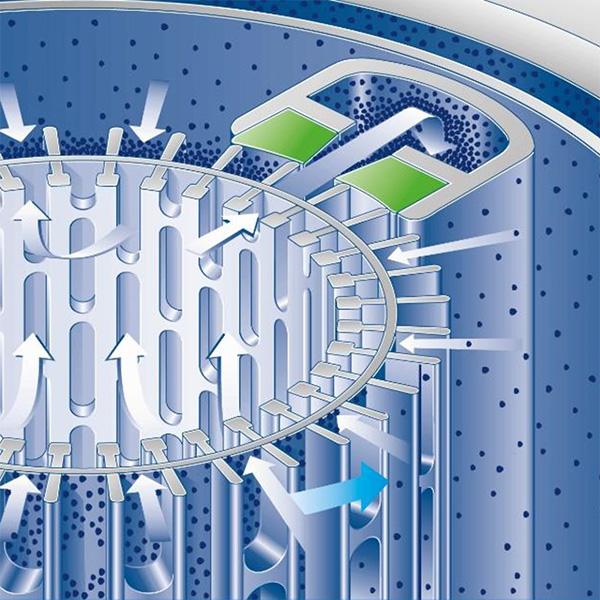
Segmented Cleaning with Self-Pressure
The rotating filter element dislodges dirt particles segment by segment using a flushing nozzle. The operating pressure on the outlet side triggers the backflushing process—without the need for an external energy source.
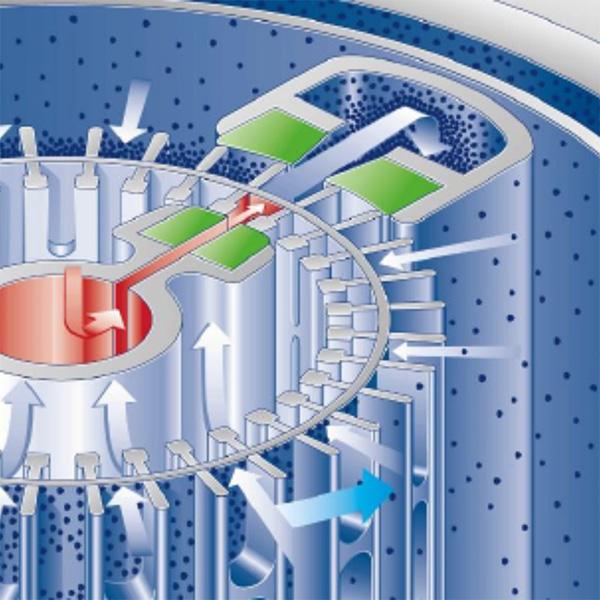
Segmented Cleaning with External Pressure
An external pressure medium triggers the backflushing process. The filter element rotates 400° around the flushing nozzle, clearing it of contaminants segment by segment.
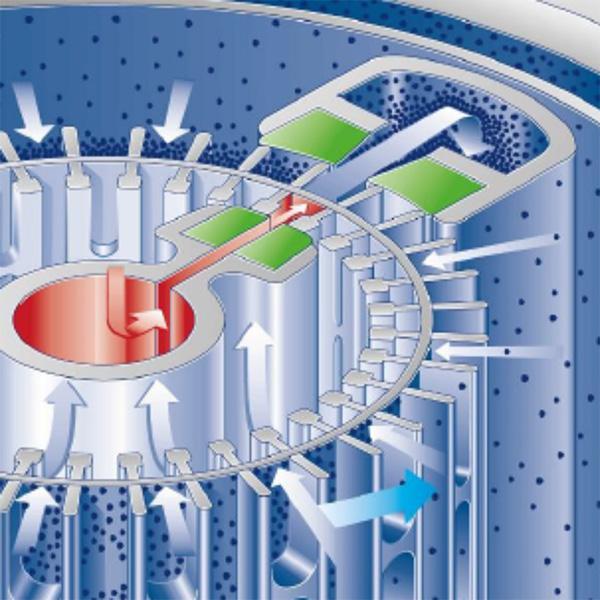
External Pressure with Pre-Separation
Stubborn particles are dislodged by an external medium. A pre-separator removes coarse particles, discharging them from the collection cone via a drain valve.
Metal Edge Filters – Precision for Highly Viscous Media
Wherever highly viscous liquids or pastes are processed, the edge gap filter is the solution of choice. Its filter element—constructed from triangular stainless steel wire—makes it ideally suited for applications involving high particle loads and flow rates of up to 900 m³/h. With available gap widths ranging from 30 to 2,000 µm, the product range covers a broad spectrum of applications—from fine homogenization to coarse process water filtration.
How it works
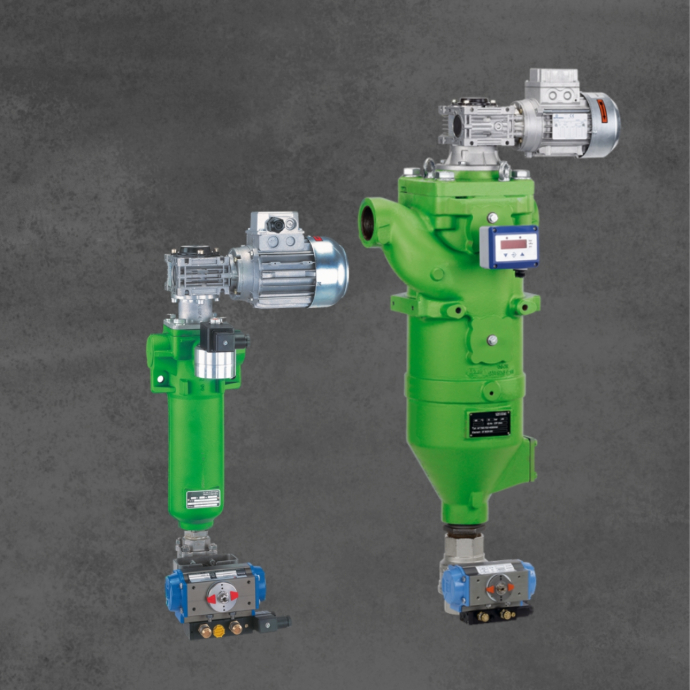
The medium to be filtered flows evenly through the filter from the outside in. Particles accumulate on the outer surface of the rotating filter element. A spring-loaded scraper lifts the particles away from the surface; they then settle into a collection cone, which is emptied via a drain valve. The Model AF 15X combines this principle with a backflush filter, thereby significantly enhancing cleaning efficiency.
Typical Applications
- Food Industry
- Printing Inks & Varnished
- PU Components
- Automotive Body Adhesives
- Polymer Dispersions
- Industrial Parts Cleaning
- Underbody Protection
- Adhesives & Pastes
Basket Filters – Robustness for Industry and Marine Applications
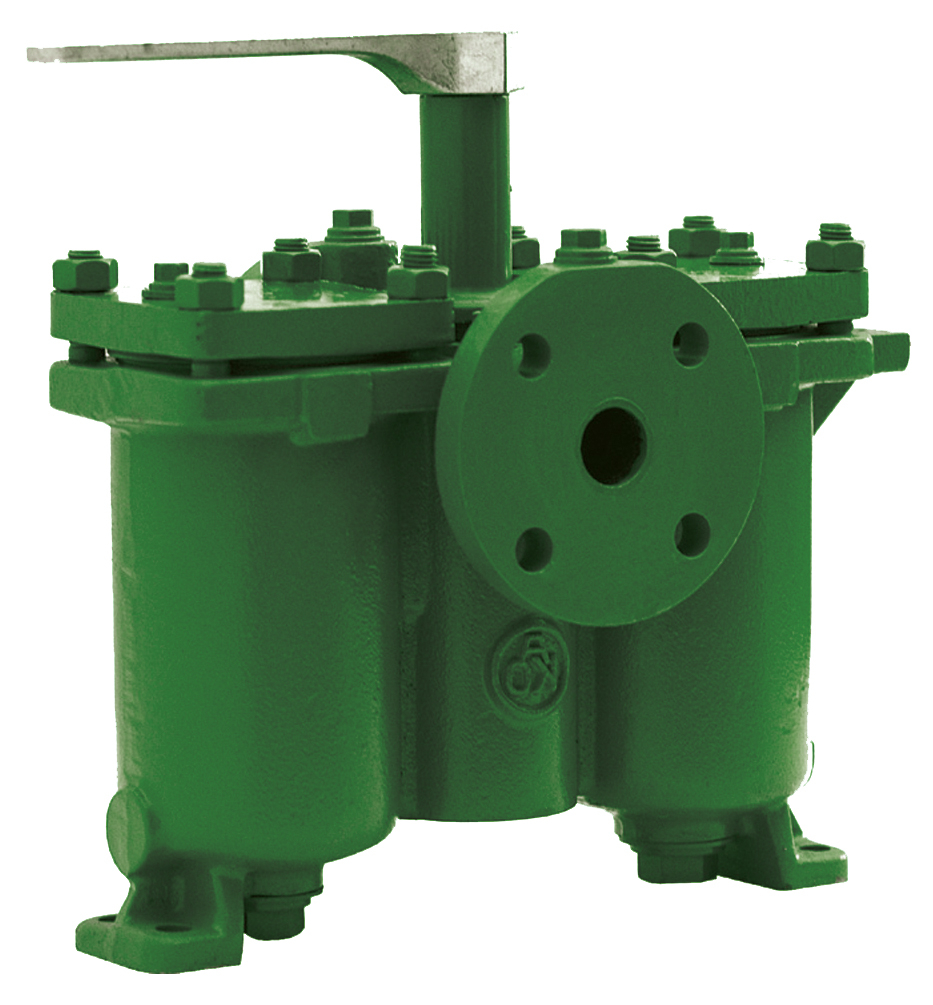
Basket strainers are the first choice in many industrial and marine sectors for reliable fluid conditioning. The metal filter element can be easily cleaned using a high-pressure washer and is impervious to pressure fluctuations—offering differential pressure resistance of up to 5 bar.
In a simplex configuration, the filter insert is removed and cleaned whenever it becomes soiled. In a duplex configuration, the second filter seamlessly takes over operations as soon as the first is being cleaned—ensuring completely uninterrupted operation.
Typical Applications
- Power Plant Technology
- Oil & Fuels
- Chemical Industry
- Pump Protection
- Automotive Industry
- Marine Inudstry
Cartridge and Bag Filters – Maximum Purity for Process Water
High-quality process water of maximum purity is indispensable for efficient, uninterrupted industrial processes. Cartridge and bag filters from Filtration Group are designed to meet this requirement—particularly in applications where wastewater must be discharged into sewers, coastal waters, or groundwater.
Thanks to their multi-layer pleated fiberglass media, cartridge filters capture significantly more contaminants than conventional filters. Pleated stainless steel mesh on both sides ensures stability and pressure resistance. Furthermore, because the fiberglass media becomes progressively finer from the outside in, the dirt-holding capacity is further enhanced. The filter retention rate is defined in accordance with ISO 16889.
Typical Process Fluids
- Cooling Water & Process Water
- Low-Viscosity Oils
- Coolants & Lubricants (Emulsions)
- Alkaline Cleaning Solutions
- Hydrocarbon Cleaners
Filter Elements – The Heart of Automatic Filtration
The full potential of an automatic filter is realized only when paired with the right filter element. Filtration Group offers the ideal element for every application:
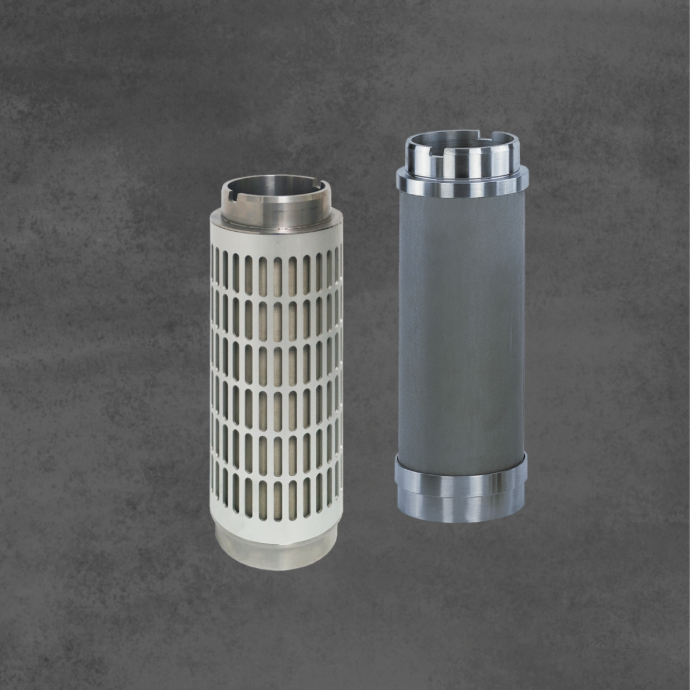
Topmesh Elements (for AF 11X/13X/17X Backflushing Filters)
Asymmetrical filter media consisting of multi-layer sintered stainless steel wire mesh mounted on a robust support body. Available in aluminum, hard-coat aluminum, and stainless steel. Cleaning via high-pressure washing or ultrasonic methods is possible. Edge-Gap Filter Elements
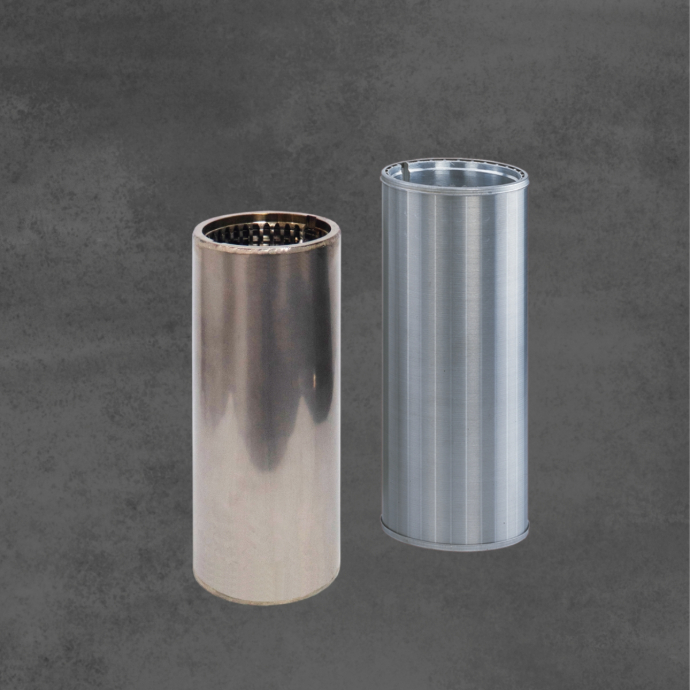
Metal-edge filter elements
Robust triangular stainless steel wire elements available in three designs: Edge-Gap Coil (wound; 30–200 µm; primarily solid contaminants), Edge-Gap Tube (welded; 50–2,000 µm; all stainless steel), and Edge-Gap Foil (100–500 µm; also suitable for gel-like or fibrous contaminants).
Automatic Filters in Coolant Systems – Not a Replacement, but a Powerful Complement
A common misconception in practice: automatic backflushing filters cannot directly replace non-woven belt filters on a one-to-one basis. The difference lies in the method of particle separation. With non-woven belt filters, filtered particles are trapped within the non-woven fabric and the filter cake, and are discharged and disposed of together with the fabric. Self-cleaning automatic filters, on the other hand, generate a liquid particle concentrate (retentate) during the backflushing process; this retentate cannot be disposed of directly and requires further processing within the coolant system.
Consequently, the primary application for automatic filters in coolant systems is as a protective and fine-filtration stage—particularly for safeguarding sensitive process components involved in high-pressure internal cooling (IKZ). A complete purification of the coolant circuit using automatic filters is achievable only when combined with other solid-liquid separation devices within the overall system.
How is the Retentate Processed Further?
Depending on the machining process and the system design, there are proven approaches for retentate processing:
Directing Retentate to the Chip Handling Area
In simple machining processes (such as turning or milling steel), the retentate is directed to the incline section of the chip conveyor. The fine chips become entangled with the coarse chips and are subsequently discharged. Under certain conditions, the belt filter can be eliminated entirely or repurposed solely for retentate processing, thereby significantly reducing non-woven fabric consumption.
Combination with a Non-Woven Belt Filter
A very common approach involves utilizing a non-woven belt filter as the initial coarse-filtration stage (approx. 100 µm) and an automatic filter as the fine-filtration stage (e.g., 25 µm). The retentate from the automatic filter is fed onto the belt filter; thanks to agglomeration effects, even the finest particles are reliably discharged.
Consumable-free system solution
A gravity separator with scraper discharge serving as the primary separation stage, combined with an automatic filter whose retentate is processed via a magnetic roller—a completely consumable-free system solution.
Benefits of Retrofitting Existing Coolant Systems with Automatic Filters
Existing coolant systems—even those already equipped with non-woven belt filters—can be significantly optimized through the targeted integration of automatic filters:
Enhanced Process Protection
Reduced tool wear and fewer machine malfunctions thanks to consistently clean coolant.
Improved Productivity
Greater process reliability, superior surface finish quality, and extended service life for internal coolant supply (ICS) components, such as spindle pumps and rotary unions.
Unmanned Shifts
Uninterrupted continuous operation—free from manual intervention—enables fully automated night and weekend shifts.
Extended Coolant Service Life
Clean coolant translates to lower microbial contamination and reduced biological degradation—meaning the emulsion lasts significantly longer.
Important Note: IKZ Protection Filters and High-Pressure Applications
A common objective in retrofitting is the replacement of duplex cartridge filters within high-pressure internal coolant supply systems with self-cleaning automatic filters. However, this task presents a significant challenge: since these cartridge filters are situated in the high-pressure zone, backflushing filters cannot be utilized there—and edge-gap filters offer only limited functionality in this specific environment. Nevertheless, the extensive variety of functional variants, filtration finenesses, and physical sizes available within our automatic filter portfolio allows us to provide a tailored solution for most applications. We therefore highly recommend a personalized consultation.
Custom Solutions—When Standard Products Aren't Enough!
Not every application can be adequately addressed using a standard off-the-shelf product. As a long-standing Premium Partner of Filtration Group, we work closely with you to develop customized filtration solutions. Through a detailed, individual analysis of your specific requirements, we identify the decisive advantage—the edge—that standard products simply cannot offer.
Contact us—whether you require custom sizes, specialized materials, or solutions for exceptional process conditions: We will find the right solution.
FAQ – Frequently Asked Questions
The Difference: Automatic Filters vs. Industrial Filters
What distinguishes automatic filters from conventional industrial filters?
Conventional filters require regular manual cleaning or replacement, resulting in production downtime and waste generation. Automatic filters from Filtration Group clean themselves autonomously during continuous operation—either utilizing the system's own operating pressure or an external pressure medium. This means: no consumables, no process interruptions, and no employee contact with hazardous substances.
Industries and Media
For which industries and media are these automatic filters suitable?
The product portfolio covers a very broad spectrum: ranging from cooling lubricants and process water to highly viscous pastes, paints, and adhesives, as well as lubricating oils, fuels, and food products (e.g., frying oil, honey, chocolate). Application industries include mechanical and plant engineering, the automotive sector, chemicals and pharmaceuticals, the food industry, marine applications, power generation, and oil and gas.
Operating Principle
How does the self-cleaning process work in backflush filters?
In the segment-by-segment cleaning method utilizing system pressure, the filter element rotates around a backflush nozzle. The operating pressure on the outlet side triggers the backflushing process, clearing the element of dirt particles segment by segment. In the external-pressure variant, an external pressure medium performs this task. In the variant featuring a pre-separator, coarse particles are additionally diverted into a collection cone and discharged via a drain valve.
Filtration Finesse
What filtration fineness levels are available?
The range is extensive: Backflushing filters cover the spectrum of fine filtration and polishing filtration. Edge-gap filters are available with gap widths ranging from 30 to 2,000 µm. Edge-perforated sheets offer precise hole sizes of 100, 200, or 500 µm. Candle filters operate according to retention ratings defined by ISO 16889. This ensures that the appropriate filtration fineness can be selected for every application.
High-Viscosity Media
Which type of automatic filter is suitable for high-viscosity media?
For high-viscosity liquids and pastes—such as paints, adhesives, PU components, cocoa butter, or underbody coatings—edge-gap filters are the right choice. Their robust, triangular stainless steel filter element is specifically designed for such demanding media and handles flow rates of up to 900 m³/h.
Operation During Filter Change
Can I maintain continuous operation during a filter change?
Yes—in fact, this is one of the core advantages of automatic filtration. Backflushing filters clean themselves without any interruption to the process. In the case of duplex basket filters, the second filter basket automatically takes over the operation while the first is being cleaned. This ensures continuous operation.
Accessories
What accessories are required for automatic filters?
The full performance potential of an automatic filter is only realized when paired with the right accessories. These include differential pressure switches, measurement and display devices, valves, electrical control systems, and components for secondary processing. We would be happy to advise you on a complete, optimally configured system setup.
Custom Solutions
Does FILCOM also offer custom solutions?
Yes. If no standard product meets your specific requirements, we will work together with Filtration Group Industrial to develop a tailored solution. Based on an individual needs analysis, you will receive a filter that is precisely tailored to your specific medium, process conditions, and spatial constraints.
Filter Elements and Spare Parts
How can I obtain suitable filter elements and spare parts?
Filter elements for all automatic filter series—including Topmesh elements for backflush filters, as well as edge-gap coils, tubes, and perforated edge sheets—are available via the FILCOM online shop. Should you have any questions regarding the correct selection, we are personally available to assist you by phone or email.
Replacing a Non-Woven Belt Filter
Can automatic filters replace a non-woven belt filter in a coolant system?
Not directly. Non-woven belt filters separate particles in a dry state—trapped within the non-woven fabric and filter cake—which are subsequently disposed of. In contrast, automatic backflush filters generate a liquid particle concentrate (retentate) that requires further processing within the coolant system. Therefore, a complete 1:1 replacement is generally not possible. However, automatic filters serve as a valuable addition—acting as a protective and fine-filtration stage—and can significantly reduce non-woven fabric consumption in existing systems.
Further Processing of the Retentate
How is the retentate from an automatic filter further processed within a coolant system?
There are several proven approaches: In turning and milling operations involving steel, the retentate is frequently directed to the incline section of the chip conveyor, where fine chips become entangled with coarse chips and are subsequently discharged. Another standard solution involves combining the automatic filter with a non-woven belt filter acting as a coarse filtration stage, onto which the retentate is directed. For consumable-free concepts, a gravity separator with a scraper discharge—combined with a magnetic roller for retentate conditioning—is a suitable choice. The optimal solution always depends on the specific machining process and the system configuration.
Retrofitting with Automatic Filters
What are the benefits of retrofitting an existing coolant system with automatic filters?
Retrofitting offers a range of tangible benefits: reduced tool wear, fewer machine malfunctions, superior surface finish quality, extended service life for internal coolant supply (ICS) components (such as spindle pumps and rotary unions), the potential for unmanned shifts, and a significantly longer service life for the coolant emulsion. The potential benefits are substantial—though they always require a system-specific assessment.
Application in High-Pressure Environments
Can automatic filters be used in the high-pressure section of an internal coolant supply system?
Their application in high-pressure environments is limited: Backflushing filters are generally unsuitable for such settings. Edge filters function only to a limited extent in high-pressure applications. Since many protective filters within ICS systems are designed as duplex cartridge filters, it is worth conducting an individual assessment to determine whether—and which type of—automatic filter might serve as a suitable replacement. We would be happy to provide you with specific advice tailored to your particular system.